Notifications

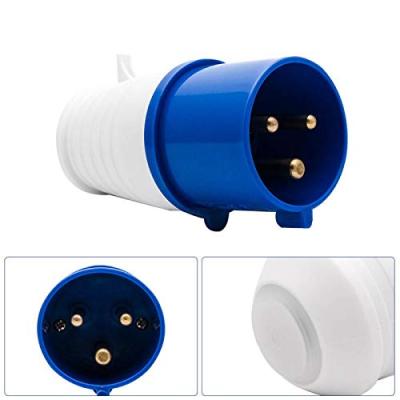
Understanding electrical connections plays an important role in ensuring safe power distribution, particularly in commercial and manufacturing environments. The220V Industrial Plug represents one such connection type that supports operations where standard home solutions may not suffice. Many individuals inquire about the distinctions between industrial plugs designed for 220V systems and ordinary household plugs, as this knowledge guides proper selection for different power needs.
Ordinary household plugs serve the requirements of daily living spaces effectively. They connect devices such as refrigerators, washing machines, and lighting fixtures to the electrical grid. These plugs usually operate with current ratings that accommodate typical household circuits, often in the range of 10 to 16 amperes depending on the region. Their design prioritizes ease of use and compatibility with common wall sockets found in residences.
In comparison, plugs intended for industrial applications handle greater electrical loads. They accommodate equipment that consumes higher amounts of power, such as heavy machinery or tools used in production lines. Current capacities for these plugs frequently reach 32 amperes or more, which allows for sustained operation of devices without overloading the system. This capacity difference arises from the need to manage increased energy flow in work settings.
Material composition contributes to the functional variations as well. Household plugs generally feature lightweight plastic bodies that offer sufficient protection for indoor, controlled conditions. The pins in these plugs follow standard configurations to match residential outlets. Industrial plugs, by contrast, incorporate durable casings and reinforced pins that resist wear from repeated insertion and removal. Such construction helps the plugs maintain integrity when subjected to mechanical stress or environmental factors.
Safety considerations form another area of divergence. In household setups, grounding systems and circuit breakers provide protection against faults. Industrial plugs often integrate locking features that prevent unintended separation from the socket during use. This mechanism supports continuous power delivery in areas with activity or movement. Additionally, some industrial designs include indicators or color codes that facilitate quick identification of voltage and phase types, aiding in correct matching with compatible sockets.
Voltage handling aligns in nominal terms for many 220V systems, yet the overall engineering differs. Household plugs align with single-phase power distribution common in homes. Industrial plugs can integrate with systems that distribute power across phases for efficiency in larger setups. This adaptability suits facilities where balanced electrical loads prevent circuit strain.
Furthermore, the choice of plug impacts overall system efficiency in electrical installations. Industrial plugs contribute to stable connections that support the demands of continuous operation cycles. Household plugs, designed for intermittent use, align with power consumption patterns in living spaces.
Environmental factors influence the suitability of each plug type. In settings with potential exposure to moisture or particulates, the construction of industrial plugs provides added resilience. Household plugs perform adequately in dry, stable indoor locations.
Usage contexts underscore these differences clearly. Homes rely on plugs for consumer-grade appliances with moderate power draws. Industrial environments employ the plugs for applications involving compressors, pumps, or conveyor systems that require robust connections. Proper selection based on these factors minimizes risks associated with improper power handling.
Maintenance and longevity also differ according to design. Household plugs undergo less frequent handling, so their components endure under light duty. Industrial plugs face constant engagement in operational facilities, where their build quality supports ongoing functionality over time. Regular inspection remains advisable for all types to ensure continued performance.
Awareness of these distinctions empowers users to choose connections that align with their specific electrical demands. Whether for home improvement projects or professional installations, matching the plug type to the application promotes effective and secure power management.Additional information on plug varieties and their applications appears through resources at https://www.socketsfe.com/ where options for various power requirements can be explored.